Water has a way of becoming invisible in our daily routines. We turn on the faucet, fill a glass, take a shower, and never really stop to consider what’s happening inside the pipes. That changes quickly, though, when the water starts tasting strange, leaves spots on dishes, or develops an unusual odor.
The good news is that household water treatment doesn’t have to be mysterious. There are several technologies available, but each one has a different job. Understanding those differences is important because the most expensive system isn’t automatically the best one.
For many homeowners, the smartest starting point is simple: understand the water first, then decide what treatment makes sense.
Related readingA Smarter Look at Whole-House Water Filtration and Advanced RO Technology
Start With Water Testing
Before buying filtration equipment, water testing should be high on the list. It gives you information about what’s actually present instead of relying on appearance, taste, or assumptions.
Depending on the water source and the reason for testing, an analysis may look at hardness, pH, iron, manganese, turbidity, total dissolved solids, bacteria, nitrates, and other characteristics.
This is especially useful for private well owners. Groundwater chemistry can vary significantly from one property to another, even within the same area.
Testing also helps avoid a common mistake: installing equipment that doesn’t address the actual issue. If your main concern is hard water, for example, a system designed only to improve taste may not solve the problem.
Related readingCleaner Water Starts With Understanding How Filtration Works
A good test gives you a starting point.
What Reverse Osmosis Actually Does
Reverse osmosis is a filtration process that uses pressure to push water through a semipermeable membrane. The membrane allows water molecules to pass while rejecting many dissolved substances.
It’s often used for drinking and cooking water because it can provide a high level of filtration at a specific point of use.
Reverse osmosis systems can reduce various dissolved contaminants, depending on the membrane and system design. They may also improve taste and odor when combined with appropriate pre- and post-filtration.
But there is a trade-off.
RO systems typically produce some wastewater during the filtration process and require periodic filter and membrane replacement. They also remove minerals from the treated water, which isn’t necessarily a problem but is worth understanding.
Related readingBetter Water Starts With Choosing the Right Treatment Approach
For many households, RO makes the most sense at the kitchen sink rather than treating every gallon used throughout the home.
Why UV Systems Are Different
While reverse osmosis focuses largely on dissolved substances, UV systems work in a different way.
Ultraviolet water treatment uses UV light to inactivate microorganisms such as bacteria and certain viruses. It doesn’t remove minerals, hardness, sediment, or most dissolved chemicals.
That distinction matters.
A UV system can be useful where microbial contamination is a concern, particularly for private wells. However, the water generally needs to be reasonably clear for UV treatment to work effectively. Excessive turbidity or suspended particles can interfere with the light reaching microorganisms.
Related readingWhat Blue-Green Stains Can Tell You About Your Water
For that reason, UV treatment is sometimes installed alongside sediment or other filtration equipment.
In simple terms, UV is a disinfection technology—not a universal filter.
Whole-Home Versus Point-of-Use Treatment
One of the biggest decisions homeowners face is where treatment should happen.
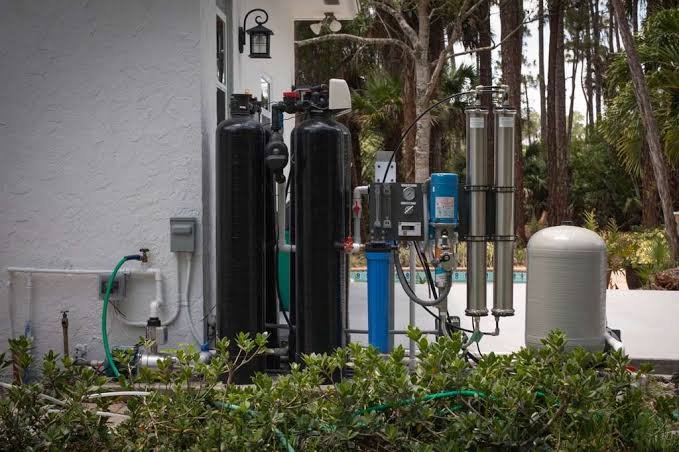
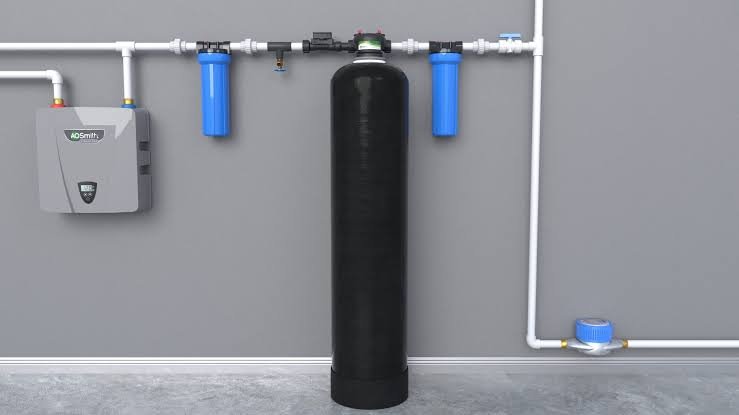
Whole-home or point-of-entry systems treat water before it enters the household plumbing. This approach can make sense when you want to address issues affecting showers, bathrooms, appliances, and other fixtures.
Related readingWhy Understanding Your Water Conditions Matters More Than You Think
Point-of-use systems treat water at a specific location, usually where drinking and cooking water is needed.
Reverse osmosis is commonly suited to point-of-use applications, while sediment filters, softeners, iron filters, and UV systems may be used as part of broader treatment setups.
There’s no rule saying a home can use only one approach. In fact, combining technologies is fairly common when the water has several different characteristics that need attention.
Hard Water Needs a Different Solution
It’s easy to assume that one sophisticated filtration system can solve every water problem. Unfortunately, water doesn’t work that way.
Hardness is primarily caused by calcium and magnesium. If hard water is creating scale on faucets, shower doors, and appliances, a traditional water softener may be more appropriate than reverse osmosis.
Likewise, an iron problem may require an iron-specific filtration system.
This is why water analysis should guide the treatment plan. Different contaminants and water characteristics require different technologies.
Private Well Owners Should Pay Attention
People who rely on private wells have an additional responsibility because their water isn’t managed by a municipal treatment facility.
That doesn’t mean well water is poor quality. Plenty of homes have excellent groundwater. But conditions can change.
Flooding, heavy rainfall, construction, changes in land use, or damage to the well can influence water quality. Testing after significant events can help identify changes before they become bigger household concerns.
Regular testing also establishes a baseline. When you know what normal looks like, unusual results are easier to spot.
Maintenance Is Part of Water Treatment
Installing a treatment system is not the end of the story.
Filters need replacement. RO membranes eventually require servicing. UV lamps have a limited operating life and should be maintained according to manufacturer recommendations. Sediment filters can become clogged.
A system that’s neglected won’t necessarily perform the way it did when it was new.
The easiest approach is to keep a simple maintenance calendar. Record filter changes, servicing, and test results. It takes little effort, and you’ll know exactly when something was last done.
How to Choose Without Getting Overwhelmed
Water-treatment shopping can quickly become confusing. Every system seems to promise something different, and technical specifications aren’t always easy to compare.
Start with three questions:
- What is actually in the water?
- What problems are you trying to solve?
- Where does the treated water need to be used?
Once those answers are clear, the options become much easier to narrow down.
Don’t choose a system simply because it has more filtration stages. Choose it because those stages are relevant to your water.
A Smarter Way to Think About Water Quality
There isn’t a single magic machine that turns every water supply into perfect water. And honestly, you probably don’t need one.
The better approach is targeted treatment. Test the water, understand the results, and select technology designed for the specific issues identified.
Reverse osmosis can be valuable for highly treated drinking water. UV can provide microbial disinfection when appropriate. Other filtration and conditioning technologies can address hardness, sediment, iron, taste, or odor.
When these tools are chosen thoughtfully and maintained properly, water treatment becomes less about buying equipment and more about solving a real household problem.
And that’s ultimately the goal: not complicated technology for its own sake, but dependable water that fits naturally into everyday life.