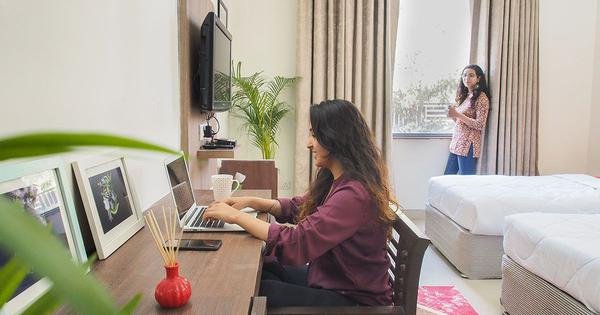
There’s a certain phase in life—usually your early twenties—when everything feels temporary. New city, new job, new routines. You’re figuring things out as you go, often with a suitcase that never quite gets fully unpacked.
In that phase, the idea of “home” changes. It becomes less about ownership and more about convenience, flexibility, and maybe a bit of companionship. That’s where co-living spaces quietly enter the picture.
Not with a loud promise, but with a simple pitch: move in, plug in, and don’t worry about the rest.
Related readingLooking Beyond Metros: Why Tier-2 Cities Are Catching Every Investor’s Eye
What Co-Living Actually Looks Like
At its core, co-living is a shared living setup—private or semi-private rooms, with common areas like kitchens, lounges, and sometimes even workspaces. Rent usually includes utilities, Wi-Fi, cleaning, and maintenance.
For someone moving to a city like Bangalore, Pune, or Gurgaon, this setup can feel like a relief. No dealing with landlords who ask too many questions, no setting up electricity connections, no buying furniture piece by piece.
You just show up and start living.
The Appeal: Why It Feels Convenient
One of the biggest draws of co-living spaces is how easy they make things.
Related readingWhen Homes Start Responding: The Subtle Rise of Smart Living in India
Everything is bundled. You don’t have to split bills with flatmates or chase someone for their share of the rent. There’s a certain predictability to it—you know what you’re paying, and you know what you’re getting.
For young professionals juggling work deadlines and city life, that simplicity can be worth a lot.
There’s also the social angle. Living among people who are in a similar phase of life can feel comforting. You might end up making friends over shared dinners or late-night conversations in the common area.
But It’s Not Always Picture-Perfect
Of course, no living arrangement is flawless.
Privacy can be limited, especially in shared rooms. Even in private setups, you’re still part of a larger community, which means noise, shared responsibilities, and occasional friction.
Then there’s the cost. While co-living spaces remove many hassles, they often come at a premium compared to traditional PGs or shared flats. You’re paying for convenience, yes—but also for services you may not always use.
And sometimes, the “community vibe” can feel a bit forced. Not everyone wants to socialize after a long day. Some people just want quiet—and that’s not always easy to find in a shared environment.
The Big Question People Are Asking
As more young Indians explore this lifestyle, a natural question comes up: Co-living spaces India me youth ke liye kitne practical hain?
The answer isn’t straightforward.
For someone new to a city, co-living can be incredibly practical. It removes the initial friction of settling in. But as time goes on, priorities shift. People start looking for more space, more control, maybe even a place they can truly call their own.
So practicality often depends on timing.
Work-from-Home Changed the Equation
The pandemic added an interesting twist to the co-living model.
Suddenly, people weren’t just living in these spaces—they were working from them too. That meant the environment needed to support productivity, not just comfort.
Some co-living operators adapted by adding dedicated workspaces, better internet infrastructure, and quieter zones. Others struggled.
This shift highlighted something important: living spaces aren’t just about where you sleep anymore. They’re about how you live your entire day.
Flexibility vs Stability
One of the biggest advantages of co-living is flexibility. Short-term leases, easy move-ins, minimal commitments—it all suits a generation that values freedom.
But at some point, stability starts to matter.
You might want to personalize your space, cook your own meals regularly, or simply have more control over your environment. That’s when traditional rentals start to look appealing again.
Co-living works well as a transitional phase—but not always as a long-term solution.
The Role of Location and Quality
Not all co-living spaces are created equal.
Some are thoughtfully designed, well-maintained, and genuinely comfortable. Others… not so much. Overcrowding, poor management, or lack of upkeep can quickly turn a promising setup into a frustrating experience.
Location also plays a big role. Being close to your workplace or having good connectivity can make a huge difference in daily life.
So while the concept is appealing, execution matters just as much.
A Lifestyle, Not Just a Housing Option
At its best, co-living is more than just a place to stay—it’s a lifestyle.
It offers a sense of belonging in unfamiliar cities, a chance to meet new people, and a way to simplify everyday living. For many young Indians, especially those just starting out, that’s valuable.
But it’s not a one-size-fits-all solution.
A Thought to Take With You
Co-living spaces reflect a broader shift in how we think about living. Less ownership, more experience. Less permanence, more flexibility.
They’re practical for a certain stage of life, for certain kinds of people. And that’s okay.
Because sometimes, “home” isn’t about staying in one place forever. It’s about finding a space that works for you—at least for now.
And maybe, in that sense, co-living is doing exactly what it’s meant to do.