We’ve all been there—staring at a login screen, trying to remember which version of “Password@123” we used this time. Was it a capital P? Did we add a number at the end? Or worse, the dreaded “Forgot Password” loop that somehow eats up five minutes of your life every single time.
Passwords were supposed to make things secure. Instead, they’ve become a mix of frustration and risk. And now, quietly but steadily, a new approach is taking shape—one that might finally let us log in without remembering anything at all.
Why Passwords Are Failing Us
On paper, passwords sound like a simple solution. Only you know your secret phrase, so only you can access your account.
Related readingA Mirror That Thinks: How Digital Twins Are Quietly Changing the Real World
But reality is messier.
People reuse passwords across platforms. They create easy-to-guess combinations. They store them in notes apps or write them down somewhere. And even when they try to be careful, data breaches expose millions of credentials every year.
The result? A system that’s both inconvenient and surprisingly fragile.
So, What Is Passwordless Authentication?
At its core, passwordless authentication removes the need for traditional passwords. Instead of something you know, it relies on something you have or something you are.
This could be a fingerprint, facial recognition, a one-time code sent to your phone, or a secure device that confirms your identity.
Related readingThe Quiet Tug of War: Edge AI vs Cloud AI in a Changing Tech Landscape
If you’ve ever unlocked your phone using your face or fingerprint, you’ve already experienced a version of it.
And naturally, the question comes up—Passwordless authentication kaise kaam karta hai? The answer lies in shifting trust from memory to identity.
The Technology Behind the Scenes
While the user experience feels simple, there’s quite a bit happening in the background.
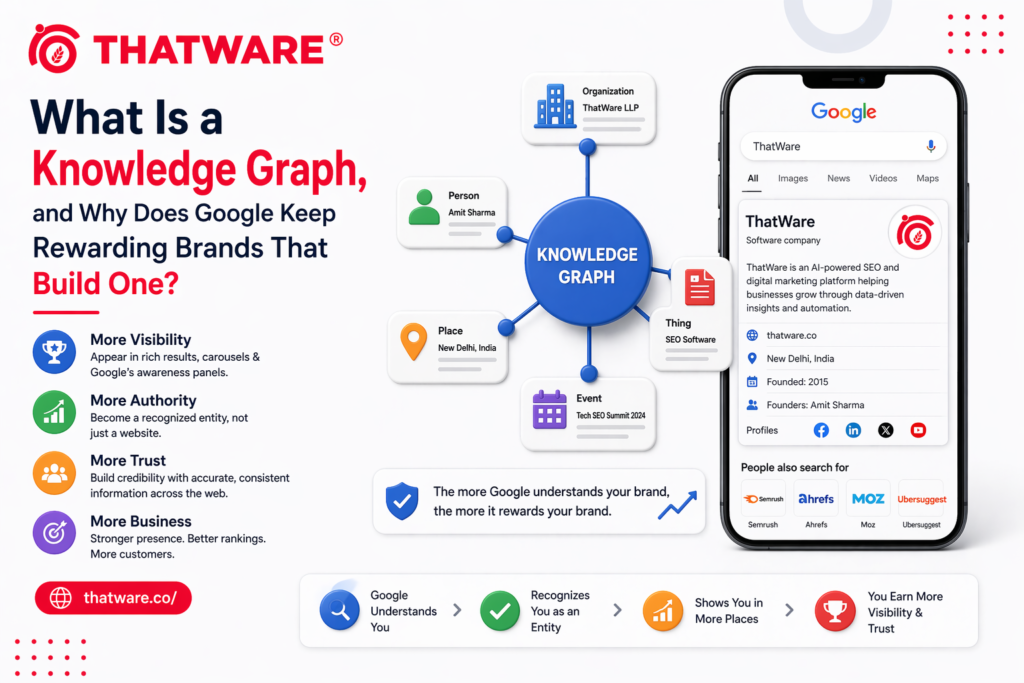
Related readingWhat Is a Knowledge Graph, and Why Does Google Keep Rewarding Brands That Build One?
Most passwordless systems use cryptographic keys. When you register, your device creates a pair of keys—one public, one private. The public key is stored on the server, while the private key stays securely on your device.
When you try to log in, the system sends a challenge. Your device signs it using the private key, and the server verifies it with the public key. If everything matches, you’re in.
No password required. No guessing game involved.
Biometrics: Convenient, but Not Perfect
Biometric authentication—like fingerprints or facial recognition—is one of the most visible forms of passwordless access.
It’s fast, intuitive, and feels almost futuristic. But it’s not without concerns.
Biometric data is sensitive. Unlike passwords, you can’t change your fingerprint if it’s compromised. That’s why most systems don’t store this data on external servers—it stays encrypted on your device.
Still, it’s a reminder that convenience always comes with trade-offs.
One-Time Codes and Magic Links
Another common approach is using one-time passwords (OTPs) or magic links.
You enter your email or phone number, and the system sends you a code or a link. Click it, and you’re logged in.
It’s simple and widely used, especially for apps and websites that want to reduce friction. But it depends heavily on access to your email or phone. If those are compromised, your accounts could be at risk too.
Security: Stronger, But Different
Passwordless authentication doesn’t eliminate risks—it changes them.
On the positive side, it reduces phishing attacks and credential theft. There’s no password to steal or reuse. Even if someone tricks you into sharing information, they still need access to your device or biometric data.
But new challenges emerge. Device security becomes critical. If someone gains access to your phone or laptop, they might bypass traditional barriers.
So while the system is stronger in many ways, it requires a different kind of awareness.
Adoption Is Growing, Slowly
Big tech companies are already pushing passwordless solutions.
You see it in login prompts that suggest using your device instead of typing a password. You see it in apps that rely on OTPs or biometric verification.
But adoption isn’t universal yet. Many platforms still rely on traditional passwords, partly because changing systems takes time and coordination.
For users, it means living in a hybrid world—some accounts passwordless, others not.
The User Experience Matters More Than Ever
One of the biggest advantages of passwordless authentication is how it feels.
Logging in becomes smoother. Faster. Less frustrating. You don’t have to remember dozens of credentials or reset them every few months.
For businesses, this improved experience can lead to better engagement. Fewer drop-offs during login, fewer support requests for password resets.
It’s a small change on the surface, but it has a noticeable impact.
Are We Ready to Let Go of Passwords?
That’s the bigger question.
Passwords have been around for decades. They’re familiar, even if they’re flawed. Moving away from them requires trust—in technology, in devices, in new systems we’re still getting used to.
Some people are ready. Others are cautious. And that’s understandable.
A Shift That Feels Inevitable
If you look at the direction things are heading, passwordless authentication doesn’t feel like a trend—it feels like a transition.
Not immediate, not complete, but gradual.
One login at a time, one device at a time, we’re moving toward a world where security doesn’t depend on memory. Where access feels seamless, almost invisible.
And maybe, just maybe, we’ll finally stop asking ourselves, “What was my password again?”